


Most Dangerous Roads in Austin: A Personal Injury Attorney’s Guide to High-Risk Areas

Being involved in a road accident can be life-changing. You may be faced not only with complex legal processes and financial setbacks, but you may also need help recovering emotionally from the event.
The capital city of Texas is renowned for its dangerous roads and negligent drivers. With 99 fatalities reported in 2025, people involved in a road accident in Austin can benefit greatly from comprehensive legal support.
This article explores everything you need to know about Austin road accidents, including which are the most dangerous roads, how to file a claim and what you should do following a car accident in Austin.
What Are the Most Dangerous Roads in Austin, Texas?
Across the major city of Austin, Texas, multiple roads, highways and intersections are commonly considered dangerous.
In 2025, 11,737 crashes occurred in Austin — the city is filled with opportunities for accidents around every corner.
Here are some of the most dangerous roads:
Interstate Highway 35
Otherwise known as the I-35, this major highway runs through the heart of Austin. It’s known for being the second most dangerous road in Texas and is widely considered one of the most dangerous roads in the U.S. as a whole.
The I-35 runs from Laredo, Texas, to Duluth, Minnesota, and its Austin section was responsible for multiple fatal accidents in 2025, including a multivehicle crash that killed five people in March.
East Riverside Drive
With a heavy commuter flow and frequently high levels of congestion, this road is known for causing serious accidents — particularly at its intersection with South Congress Avenue.
In particular, reckless drivers and bus drivers who misjudge the stopping distance of their vehicles often collide with pedestrians and other vehicles at this intersection.
The intersection of East Riverside Drive and S. Pleasant Valley Road is also extremely accident-prone. It’s commonly considered the most dangerous intersection of Austin’s east side.
State Highway 130 (SH 130)
Thanks to its high speed limits of up to 85 mph, State Highway 130 is often considered a high-risk road.
Although the frequency of accidents is relatively low compared to the I-35, this alternative route frequently experiences severe accidents.
Trinity and E. 7th Street
This intersection is often considered Austin’s most dangerous intersection for pedestrians.
The downtown intersection was the site of a fatal pedestrian hit-and-run in May 2025.
Other Accident Hot Spots in Austin
Other dangerous roads include:
- Guadalupe Street
- U.S. Route 290
- Ben White Boulevard
Other dangerous intersections include:
- Butler Road and Lamar Boulevard
- Highway 183 and Loyola Lane
- Parmer Lane and N. Lamar Boulevard
- Riverside Drive and Willow Creek
What Are the Common Causes of Car Accidents in Austin?
Although Texas Transportation Code § 545 legally mandates drivers to operate their vehicles practically and only move from lanes when it is safe to do so, there are many factors that cause accidents in Austin.
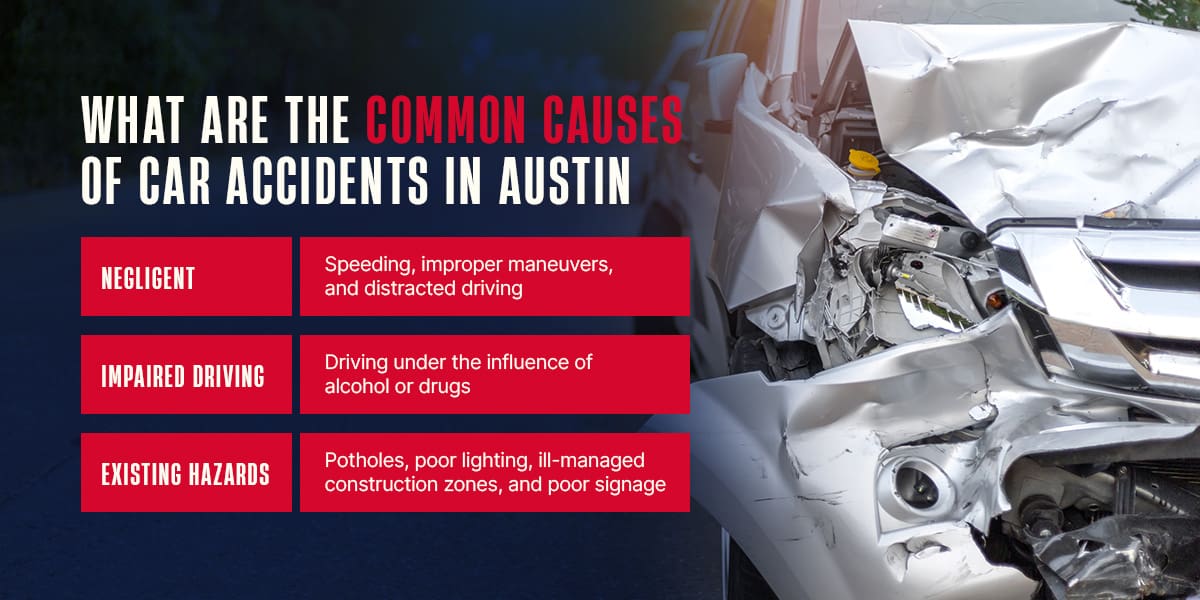
The most common causes of car accidents in Austin include:
- Negligent driving: This can include speeding, improper maneuvers, and distracted driving from using navigation apps or mobile devices.
- Impaired driving: Driving under the influence of alcohol or drugs is a significant contributor to serious car accidents in Austin.
- Existing hazards: Potholes, poor lighting, ill-managed construction zones, and inadequate or confusing signage are some examples of hazards that can cause car accidents.
What to Do After a Car Accident on a Dangerous Road in Austin
If you experience a car accident in Austin, you must take several steps both at the scene and in the following days to ensure the safety of yourself and others:
- Call 911: As soon as it is safe to do so, call the police to report the accident and request medical assistance. Although it is always recommended to report an accident to the police, it is only required under Texas law if the damages caused by the accident exceed $1,000.
- Move your vehicle: If it is safe to do so, and if your vehicle is operable, you should move it to the side of the road to prevent further accidents from occurring.
- Collect information: You should collect the information of all other involved parties, including their names, insurance policy numbers and phone numbers.
- Take photo and video evidence: You should capture the state of all involved vehicles, as well as road conditions and nearby landmarks.
- Seek medical attention: Once medical care arrives, you should receive attention. Not all injuries are obvious or visible, so you should request medical assistance no matter how well you feel.
- Gather witness statements: Request statements from any present witnesses to help corroborate your experience for future insurance and legal purposes. Request any video footage available from witnesses or nearby surveillance cameras.
- Inform your insurance: Once the accident is under control, you can contact your insurance provider to inform them of your accident. You should let them know within 72 hours, wherever possible.
- Request insurance information: You should ask your provider for details regarding your policy terms, including your coverage limits, deadlines for filing a claim and any deductibles.
- Maintain written records: Wherever possible, retain written records of all communications you have regarding the accident, be it with the police, other parties or your insurance provider.
- File a police report: Under Texas Transportation Code § 550.062, you must file a police report within 10 days from the incident if it resulted in injury, death, or damage of $1,000 or more.
- Contact a personal injury attorney: If you have been injured on a dangerous road, consider contacting a personal injury lawyer or Austin car accident attorney to help you protect your best interests, navigate the claims process and learn how to get compensation for a road accident in Austin.
- Avoid communicating with the other party: To protect your rights and any claims you might make, you should avoid conversing with the other party and their insurance provider.
- Make a claim within two years: If you wish to make a successful claim, you must file within two years of the accident under Austin’s statute of limitations for car accident insurance claims.
Why You Need a Personal Injury Lawyer
If you have been involved in an Austin road accident, comprehensive legal support is critical.
A qualified attorney can protect your rights and best interests and help you navigate:
- Negligence claims: Negligence is a core theory for determining who is at fault and who bears financial responsibility for the accident. As negligence is one of the primary elements of injury claims in Texas, having an attorney who can guide you through a negligence claim is extremely important.
- Potential damages: If you have been injured or your property damaged in a road accident in Austin, you may be entitled to a range of economic and intangible damages, such as medical expenses, lost wages, or pain and suffering damages.
Why You Can Trust Thomas J. Henry Law
At Thomas J. Henry Law, we are nationally recognized for having successfully represented personal injury victims for over 25 years.
Our dedicated Texas-based attorneys have represented clients in large-scale injury cases against some of the biggest organizations across the U.S., including both Fortune 100 and Fortune 500 companies. With our fearless dedication to our clients, we can help you through the complex legal processes associated with road accidents, assist you with your claim and protect your best interests throughout.
If you have been involved in a road accident in Austin, reach out to Thomas J. Henry Law for a free consultation today.
Blog